



Technological Innovation in Learning the Quran through Android Applications in Ummi Method Learning Management on the Ghoroibul Qur'an Material
Abstract
The use of application-based digital media provides a solution to the problem of limited teacher and student access to Ghoroibul Qur'an text and audio materials that have been distributed unstructured through WhatsApp and YouTube. This application is designed to be accessible offline and integrated with the Ummi curriculum, thereby increasing learning efficiency, student independence, and assisting teachers in the planning, implementation, and evaluation of learning. This study aims to identify teacher and student obstacles in the learning process and recommend an innovative model of Android application-based learning media as an alternative solution. This study uses a descriptive qualitative approach with data collection techniques through observation, interviews, and documentation. The results show that the developed application acts as an innovative media that combines text and audio materials in one platform, can be accessed without an internet connection, and is designed to meet field needs. This recommendation is considered innovative in supporting more efficient, standardized, and relevant learning management to the development of technology-based Islamic education in the digital era.
Keywords
Full Text:
PDFReferences
Alsharbi, B. M., O. Mubin, and M. Novoa. “Quranic Education and Technology: Reinforcement Learning System for Non-Native Arabic Children.” Procedia Computer Science 184 (2021): 306–13. https://doi.org/10.1016/j.procs.2021.04.007.
Al-Suyuthi, Jalaluddin. Al-Itqan fi ‘Ulum al-Qur’an. Jilid 2. Dar al-Kutub al-‘Ilmiyyah, 2003.
Azra, Azyumardi. Pendidikan Islam: Tradisi dan Modernisasi Menuju Milenium Baru. Logos, 1999.
Bashir, M. H., A. M. Azmi, H. Nawaz, et al. “Arabic Natural Language Processing for Qur’anic Research: A Systematic Review.” Artificial Intelligence Review 56, no. 7 (2023): 6801–54. https://doi.org/10.1007/s10462-022-10313-2.
Fullan, Michael. The New Meaning of Educational Change. Teachers College Press, 2001.
Ginting, Rahmadani Fitri, Harun Ar Rasyid, Isnu Yulia Mulan, and Harmansyah Ramadhan. “Analisis Penggunaan Audio Murottal Dalam Membantu Muraja’ah Dan Dampaknya Terhadap Kualitas Hafalan Al-Qur’an Santri Pondok Pesantren Tahfizh Yayasan Wakaf Surro Man Roa.” Kreatifitas Jurnal Ilmiah Pendidikan Islam 13, no. 2 (2024): 2. https://doi.org/10.46781/kreatifitas.v13i2.1212.
Hamdi, Rafii, Muhammad Yuliansyah, and Husnul Madihah. “Implementasi Manajemen Sekolah Ramah Anak (Studi Kasus: SD Negeri 8 Kampung Baru Dan SDIT Ar-Rasyid, Kabupaten Tanah Bumbu).” Jurnal Manajemen Pendidikan Al Hadi 3, no. 2 (2023): 66. https://doi.org/10.31602/jmpd.v3i2.11539.
Hanafri, M. I., M. Iqbal, and C. A. G. Santi. “Aplikasi Pembelajaran Menghafal Surat-Surat Pilihan Al-Qur’an Untuk Sekolah Dasar Berbasis Android.” Academic Journal of Computer Science Research 1, no. 1 (2019).
Isti’ana, Ais. “Integrasi Teknologi Dalam Pembelajaran Pendidikan Islam.” Indonesian Research Journal on Education 4, no. 1 (2024): 1. https://doi.org/10.31004/irje.v4i1.493.
Moleong, Lexy J. Metodologi Penelitian Kualitatif. Remaja Rosdakarya, 2010.
Mursida, Mursida. “Pengaruh Kualitas Pengajaran, Fasilitas Belajar, Dan Sumber Belajar Terhadap Prestasi Belajar Siswa.” CENDEKIA: Jurnal Ilmu Pengetahuan 5, no. 2 (2025): 2. https://doi.org/10.51878/cendekia.v5i2.4727.
Rahma, Nuriya, and Muhammad Khoirul Ritonga. “Analisis Kesulitan Guru dalam Kegiatan Belajar Mengajar Siswa MTs Hafizul Ikhsan pada Era New Normal.” Jurnal PIPSI (Jurnal Pendidikan IPS Indonesia) 7, no. 2 (2022): 123–33. https://doi.org/10.26737/jpipsi.v7i2.3094.
Rosadi, D., and A. Mulyawan. “Aplikasi Pembelajaran Al-Qur’an Dalam Kajian Ilmu Tahsin Berbasis Multimedia.” Jurnal Computech & Bisnis (e-Journal) 15, no. 2 (2021).
Sagala, Syaiful. Konsep dan Makna Pembelajaran. Alfabeta, 2010.
Sauqi, A. and Himawan. “Aplikasi Belajar Mengaji Berbasis Android.” Jurnal Maklumatika, 2020, 90–99.
Septiani, R. Anisya Dwi, Widjojoko, and Deni Wardhana. “Implementasi Program Literasi Membaca 15 Menit Sebelum Belajar Sebagai Upaya Dalam Meningkatkan Minat Membaca.” Jurnal Perseda : Jurnal Pendidikan Guru Sekolah Dasar 5, no. 2 (2022): 130–37. https://doi.org/10.37150/perseda.v5i2.1708.
Sudiarjo, A., A. R. Mariana, and W. Nurhidayat. “Aplikasi Pembelajaran Ilmu Tajwid, Waqaf Dan Makharijul Huruf Berbasis Android.” Jurnal Sisfotek Global 5, no. 2 (2015).
Tawakal, F., D. Wahyuni, and A. Aldisyah. “Aplikasi Pembelajaran Iqro’ Sebagai Sarana Membaca Al-Qur’an.” Informatika 12, no. 2 (2020). https://doi.org/10.36723/juri.v12i2.227.
Trilling, Bernie, and Charles Fadel. 21st Century Skills: Learning for Life in Our Times. John Wiley & Sons, 2009.
DOI: http://dx.doi.org/10.35931/aq.v20i1.5524
Refbacks
- There are currently no refbacks.
Copyright (c) 2026 Muhammad Ryan Maulana, Jarkawi Jarkawi, Husnul Madihah

This work is licensed under a Creative Commons Attribution 4.0 International License.
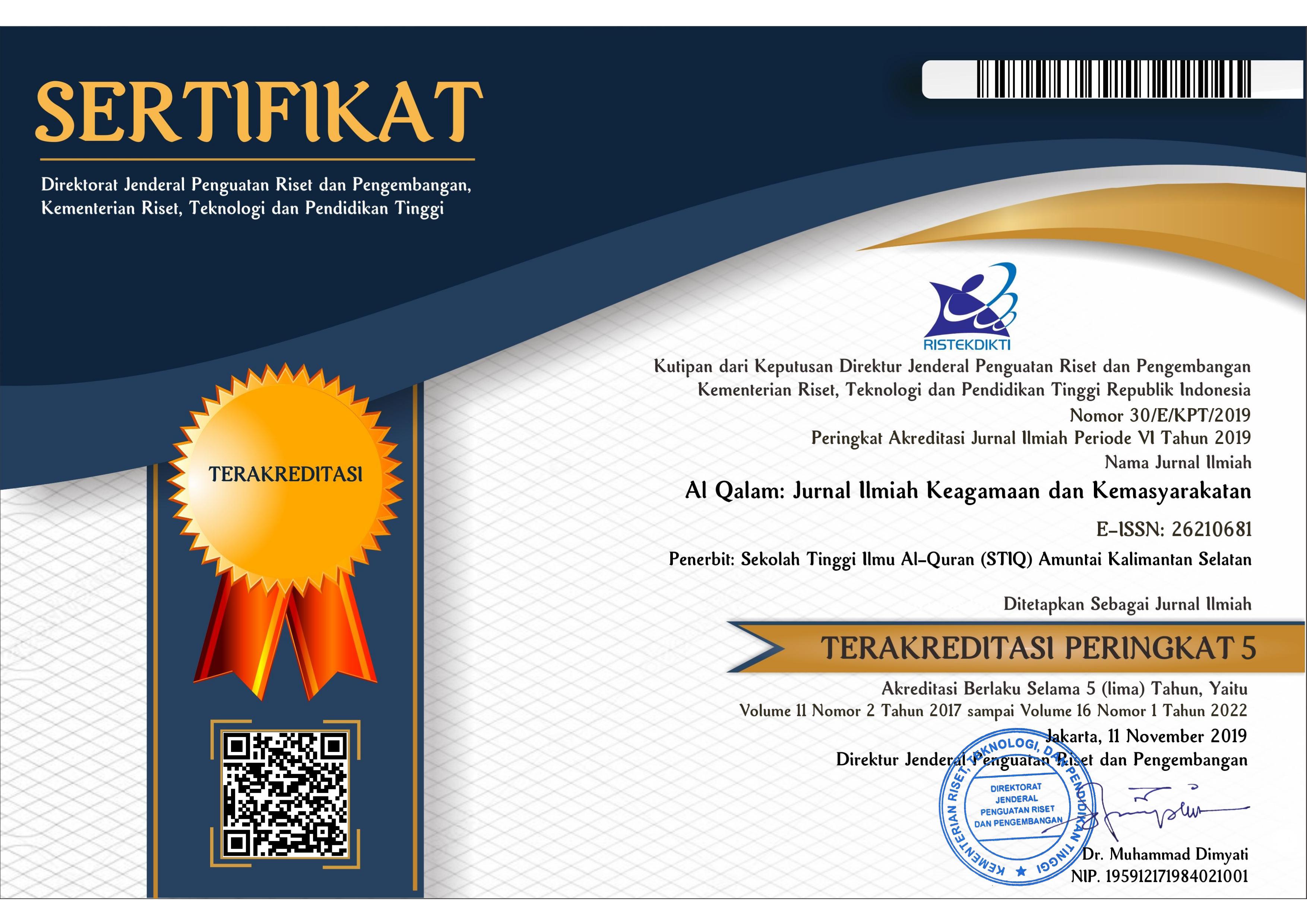
Al Qalam: Jurnal Ilmiah Keagamaan dan Kemasyarakatan
index by:










Publish by:
Sekolah Tinggi Ilmu Al-Qur'an Amuntai
Contact us:
Address: Jl. Rakha Pakapuran, Amuntai Utara
Kabupaten : Hulu Sungai Utara
Kode Pos : 71471
Provinsi : Kalimantan Selatan
Telephone : 085251613000
Email: hafizhihusinsungkar@gmail.com

This work is licensed under a Creative Commons Attribution 4.0 International License